
Searching King William County Warrant Records
Virginia Online Case Information System (OCIS 2.0) is the public starting point for adult criminal and traffic case information. It is not a complete warrant register. Choose the locality in the General District Court search when checking a King William traffic or misdemeanor case, then verify process status with the clerk. No King William sheriff roster or direct warrant line was located.
For a useful search, gather the person's own full legal name as written on the court paper, date of birth, case or citation number, and approximate hearing date. Use the result to find the right court, not to make a final call about status. If the question concerns a relative, help them contact the clerk and keep the record private.
- Open the Virginia Judiciary OCIS page or the GDC locality search. Select King William for a local General District Court search.
- Search with the spelling on the citation, summons, or warrant. OCIS help permits partial names with at least two characters in each name entry.
- Check the case number or hearing date if the name search is unclear, and note the court and process details.
- Call GDC at (804) 769-4947, Circuit criminal at (804) 769-4937, or JDR at (804) 769-4946, according to the case.
- Call the Sheriff's Office at (804) 769-0999 for law-enforcement confirmation. Use county FOIA for existing sheriff-held records not shown online.
No King William County Warrant Roster
The Sheriff's Office publishes its address, staff directory, and general phone number, but the official county pages reviewed do not show a searchable active-warrant table or a separate warrant phone line. Call (804) 769-0999 and ask which office can confirm the process in question. The Sheriff can answer law-enforcement questions; the issuing court controls a recall or quash order.
The Sheriff's Office page is the official contact point. Its directory identifies a Records Manager/FOIA contact, while no public warrant-search form was located.
When the Sheriff does not hold the relevant case record, the court clerk can identify the next route.
What a Warrant Search Asks For
Virginia's search options depend on the court interface. In the GDC locality search, the first choice is the court; name, case number, or hearing date can then locate a case. The system does not publish a King William warrant-number format, and date of birth is not listed as a required field on the captured public search route. Do not guess at a number or treat a similar name as a match.
| Field Label | Type | Required | Notes |
|---|---|---|---|
| Court or locality | Select menu | Yes for GDC search | Choose the individual General District Court, including King William. |
| Name | Text | Not stated | Use document spelling; partial name is allowed under OCIS help rules. |
| Case number | Text | Not stated | Enter the number printed by the court; local format is not published. |
| Hearing date | Date | Not stated | Available for a selected GDC locality search. |
| Search | Button | Action | Returns case information if the selected court has a matching entry. |
King William Warrant Search Needs Document Spelling
OCIS search help says the name on the citation, summons, warrant, or other court paper gives the best starting spelling. Its partial-name option allows each entry to contain at least two characters. This can help locate a case when a person is unsure of a name variation, but it also means the searcher must compare the returned court, case number, and charge before calling.
The official search help explains those rules. The screen capture below contains no person-specific search result.
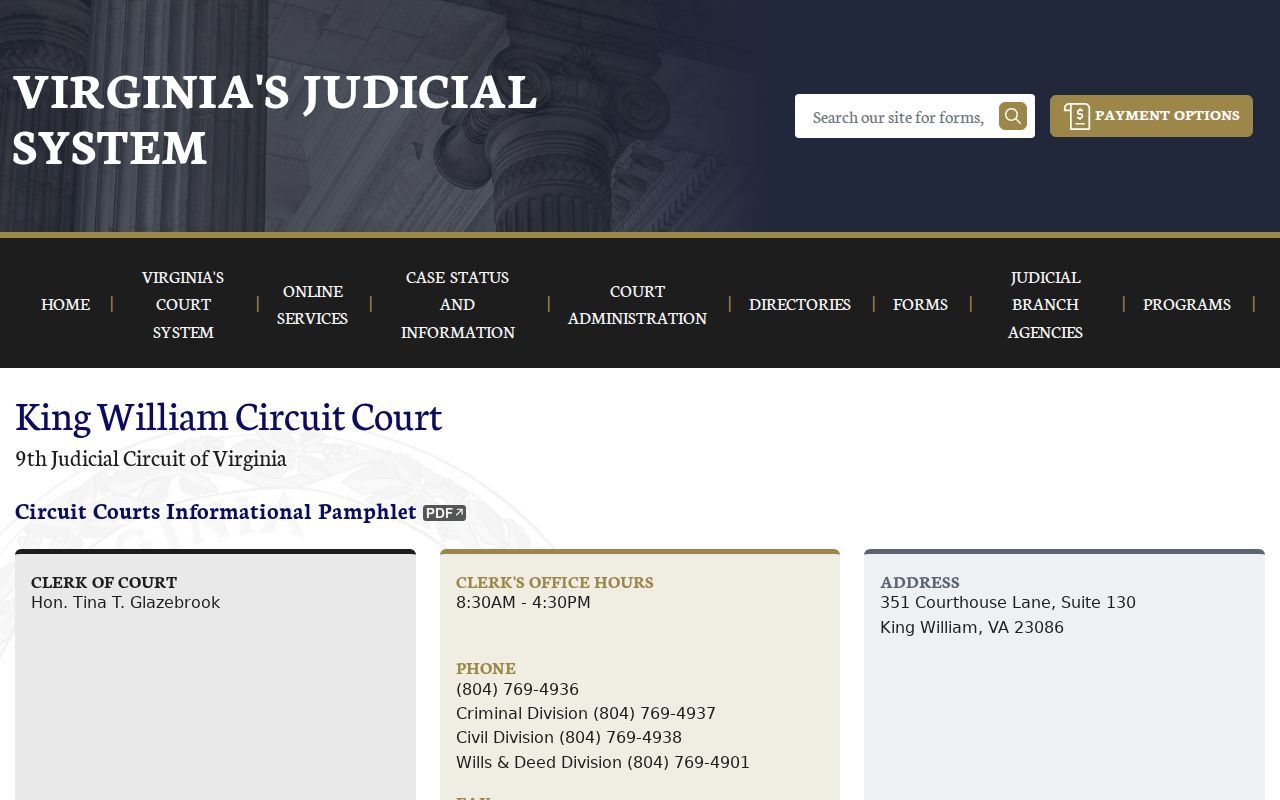
For a felony case, the Circuit Court criminal division can explain which file number and court action matter.
King William County Warrant Search Results
OCIS returns case information supplied by the court. The exact fields vary with the record, and a public case page is not a copy of the warrant itself. A sample warrant was not available for safe transcription, so the table describes fields that may appear or that the clerk can confirm. The number below is a label, not an invented local format.
| Case identifier | CASE NUMBER FROM COURT PAPER The actual format must come from the court document. |
|---|---|
| Charge or offense | May show the case offense or citation; check the charging document for the full detail. |
| Issuing court | Shows where the case is filed and which clerk should answer process questions. |
| Bond terms | Case-specific; no general King William warrant bond schedule was found. |
| Process status | Ask whether the warrant or capias is outstanding, served, returned, recalled, or quashed. |
King William Warrant Checks Cross Court Lines
A felony file and a traffic case do not share one local clerk. Tina T. Glazebrook's Circuit Court office keeps felony and circuit criminal records. Jill Hall's GDC office handles local traffic and misdemeanor case information. Shannon F. Meadowcroft's JDR office handles family, support, juvenile, and other JDR matters, with protected categories kept out of a general public search.
The JDR court page lists its contact and docket information. The image below identifies that separate court route and does not expose a private case.
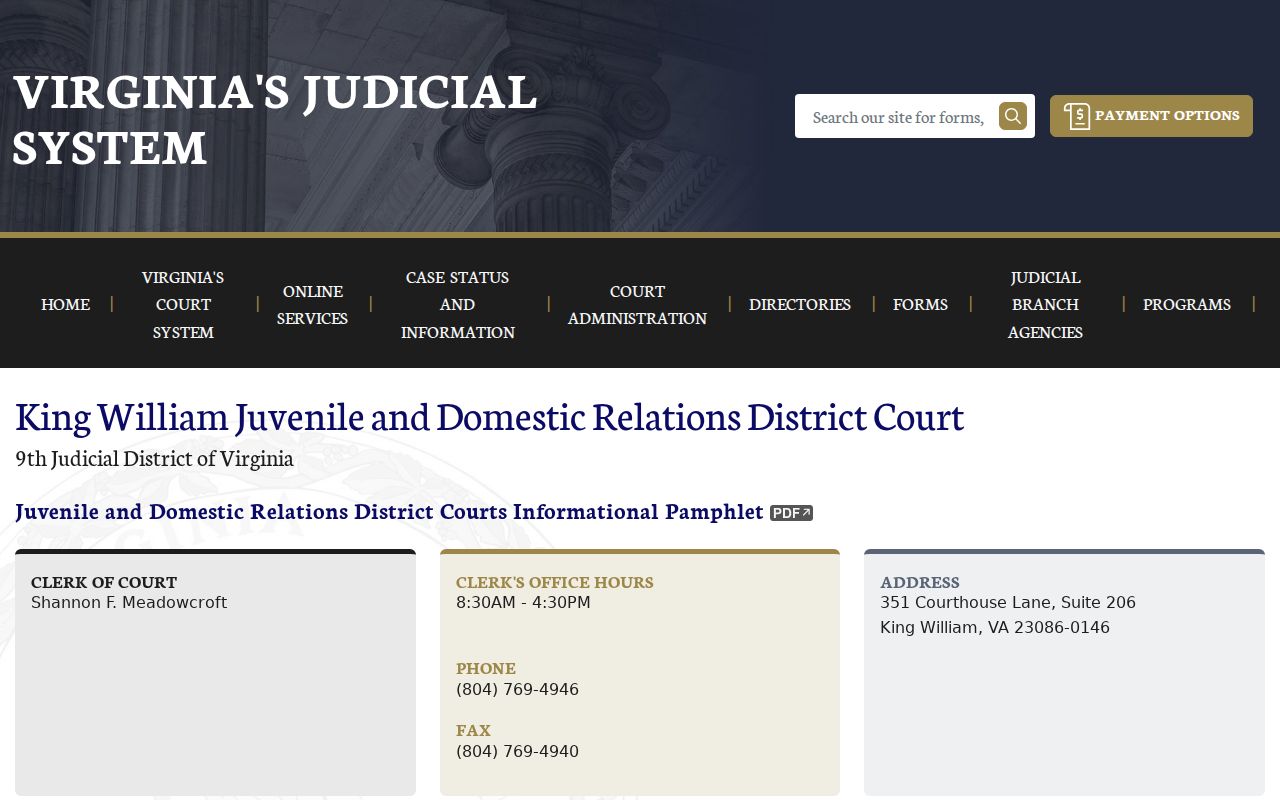
When a case could be in JDR, call the clerk and expect limits on what can be shared publicly.
King William County Warrants: Who Holds What
GDC holds traffic and misdemeanor case information, Circuit keeps felony files, and JDR controls its own support, family, and juvenile matters. The magistrate reviews complaints and can issue certain process and make initial bail decisions. The Sheriff's Office is the county law-enforcement contact, but no public active-warrant search or dedicated phone line was found.
West Point is not a separate public municipal-court search route in the current sources. Its traffic matters appear on King William GDC's schedule. Federal matters use a different court and law-enforcement system, while OCIS covers public adult Virginia court cases only. The proper clerk depends on the case, not on where a person lives.
King William FOIA Requests Need Specific Records
Virginia FOIA is useful for an existing record held by the Sheriff's Office, not for a request that the county create a new warrant report or give legal advice. Identify the record with reasonable detail, include your name and legal address, and ask whether the sheriff or a court clerk holds it. The county accepts requests through several channels and directs Sheriff's Office requests to its online portal.
The county FOIA instructions describe the request process and response timing. The directory image below shows the records manager and public-office routing information.
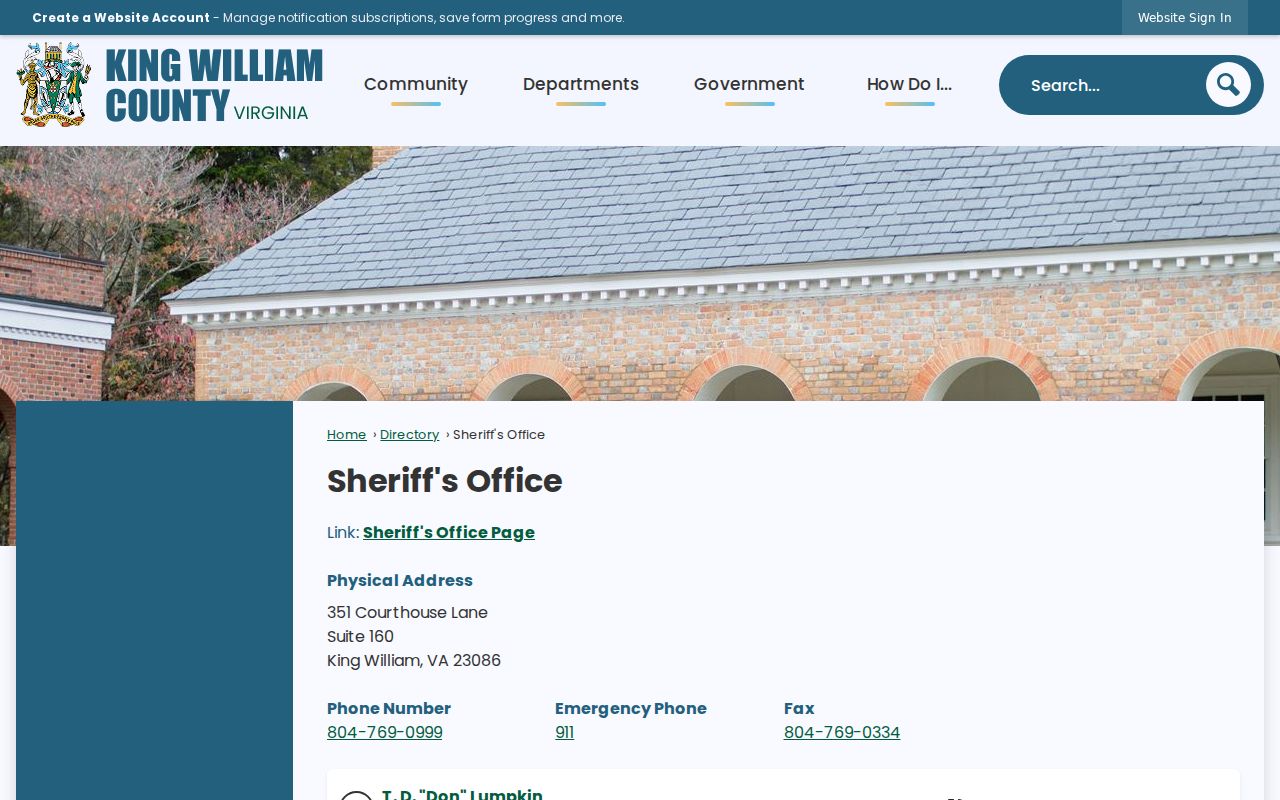
A narrow written request can help the office find an existing record, but statutory exemptions may limit what it releases.
West Point Traffic Cases Use County GDC
West Point has its own police department, but the town's current public sources do not show a separate court case portal or warrant form. The King William General District Court schedule lists West Point Police traffic matters at 10:30 a.m. on its first through fourth Thursday dockets. A town citation should therefore be traced through GDC before assuming a municipal-court record exists.
For a traffic or misdemeanor question, call GDC and ask whether the case shows a warrant, capias, or only a past-due balance. The town police nonemergency line can route an agency question, but the issuing court controls case status.
Which Warrants Stay Restricted
Public case access does not include every court or law-enforcement record. Juvenile law-enforcement records have special protection, and JDR matters can include confidential family information. A sealed or investigative record may also be withheld or redacted under Virginia law. The county may release a public portion while withholding exempt material.
Key Rules:
A sealed or unserved record may not be visible in a public interface; ask the issuing court what access rule applies.
Virginia Code § 16.1-301 protects juvenile law-enforcement records from general public inspection.
No result in OCIS or on a county site does not prove that no warrant exists; confirm with the issuing clerk and Sheriff's Office.