
Bench Warrants in King William County
A bench warrant is court process connected to a matter already before a judge. In King William, a missed appearance or failure to comply with a court direction can bring the issue back before the judge, who decides what order is appropriate. A missed date does not let a reader infer the result without checking the docket; the judge's action and the case history matter.
These records are tied to the court that handled the underlying case. King William's General District, Circuit, and Juvenile and Domestic Relations courts keep distinct dockets. Start by identifying the case and court, then ask that clerk how to confirm the entry and what procedure is available. The court controls its own order.
King William Bench Warrants Begin With Attendance
For a person who missed a hearing, the most useful first task is to verify what happened in the case. Check the date and docket, then ask the clerk whether the judge continued the matter, entered a capias, or issued another direction. Do not assume that every absence produces the same order or that a later hearing notice cancels existing process.
Give the court the case number if available. If the reason for missing court involved illness, a notice problem, or another urgent circumstance, preserve relevant documents and discuss the next step with counsel. Court staff can explain where to file and how to access the record, but they do not decide a motion outside the judge's authority.
How King William Bench Warrants Issue
A judge may issue a bench warrant or capias after a person fails to appear or comply with an order, depending on the case and governing procedure. The order authorizes law enforcement to take the named person into custody and bring the matter back to court. It is not simply a reminder notice, and the person should obtain current instructions before deciding how to respond.
After issuance, court and law-enforcement records may each reflect part of the event. A docket can show what the judge ordered; the Sheriff handles execution questions. A later appearance, bond event, or recall may change the situation, so confirm the newest case entry and ask whether any further step remains.
King William Court Dockets Follow Case Type
King William County has separate courts rather than a single local docket for every case. General District Court handles many adult traffic and misdemeanor matters. Circuit Court maintains felony matters and appeals from General District Court. Juvenile and Domestic Relations District Court handles matters within its jurisdiction, including juvenile cases and certain family matters. The court that set the hearing is the likely starting point for a missed appearance question.
The town of West Point has its own police department, but the research identifies the County General District Court as the current route for local traffic cases; it does not identify a separate operating town warrant court. That local distinction can prevent a searcher from calling the wrong court based only on the town where an event occurred.
King William Bench Warrant vs Arrest Warrant
Both kinds of process can authorize custody, but they arise in different settings. A bench warrant is associated with a court case and a judicial response to a missed appearance or other failure to comply. An arrest warrant generally follows a probable-cause application concerning an alleged offense. For the county's process and issuing offices, see King William arrest warrants.
| Feature | Bench warrant | Arrest warrant |
|---|---|---|
| Typical basis | Failure to appear or follow a court direction in an existing matter | Judicial finding of probable cause related to an alleged offense |
| Origin | Judge handling the pending court case | Judge or magistrate acting on a warrant application |
| Record to check | Docket and order in the underlying case | Issuing court record and agency confirmation |
| Resolution route | Contact issuing court; counsel may seek recall or other relief | Confirm terms and arrange a court-directed appearance or surrender |
King William Capias Entries Need Review
Capias is a term that may appear in a court record, but a reader should not translate a bare docket label into a complete statement about present status. The exact order, later events, and court's current record control. Ask the clerk what the entry means in that case and whether another event followed it.
The General District Court clerk is in Suite 201 at 351 Courthouse Lane and lists 804-769-4947 for contact. The clerk's published public hours are weekdays, 8:30 a.m. to 4:30 p.m., with filings accepted until 4 p.m. A call before traveling can help confirm the correct counter, record, and filing procedure. Those hours do not guarantee same-day judicial review.
Source: King William County courthouse history.
The courthouse setting is a reminder to confirm which division holds a case before visiting.
Resolve a King William Bench Warrant
The correct route depends on the underlying case and the judge's order. Confirm the court and current status before traveling or making a payment. An attorney can review the docket, advise whether a motion to recall or quash is appropriate, and explain whether voluntary surrender, bond, or a scheduled appearance should be considered.
- Locate the case number and identify the issuing court.
- Ask the clerk how to obtain the current docket and order.
- Speak with counsel about a motion, surrender, or bond questions.
- Follow the court's instructions and confirm that the underlying obligation is addressed.
Caution: Do not ignore court process; confirm the order and get advice before acting, because an unresolved warrant can lead to arrest.
King William Recall Motions Need the Court
A sheriff can answer law-enforcement process questions, but the judge who issued a bench warrant controls whether to recall or modify it. A motion should be filed in the correct case and court. Do not assume that calling the Sheriff's Office, paying an unrelated balance, or appearing at the courthouse lobby automatically removes a warrant.
Before filing, ask the clerk about accepted forms, filing methods, and whether the matter must be set for a hearing. A lawyer can explain what evidence may support a request and what consequences to expect. If a person cannot retain counsel, ask the court or local legal-aid resources about available procedural information; the clerk cannot recommend a legal strategy.
Which King William Court Issued It
Start with the court named in the missed notice, summons, or case paperwork. For General District Court matters, the clerk's office is Suite 201, 351 Courthouse Lane, King William, and the listed number is 804-769-4947. Circuit Court's criminal division is in Suite 130; call 804-769-4937 for criminal-record routing. The Juvenile and Domestic Relations clerk is in Suite 206 and lists 804-769-4946. Juvenile access is restricted, so public search results may not show the full record.
Use the King William warrant check steps to identify the record system, then contact the court that owns the case. Do not route a juvenile matter through an adult case search or treat a town location as proof that a different court issued process.
King William Court Access and Bond Questions
Bond terms are case-specific. A public record may display a bond amount or bond event, but confirm the current amount, acceptable payment method, release conditions, and timing with the court or facility before acting. The county's published convenience-payment rules include a card fee, so a payment total can differ from the underlying court balance. Payment does not itself establish that a warrant has been recalled or that a hearing is no longer required.
For a warrant-related question, keep the case number, full name as used in court, and the court division ready. Ask where a motion must be filed and how to confirm the judge's decision after the filing. If the matter concerns custody after arrest, the regional facility is a separate contact from the issuing court.
Source: King William County court and payment information.
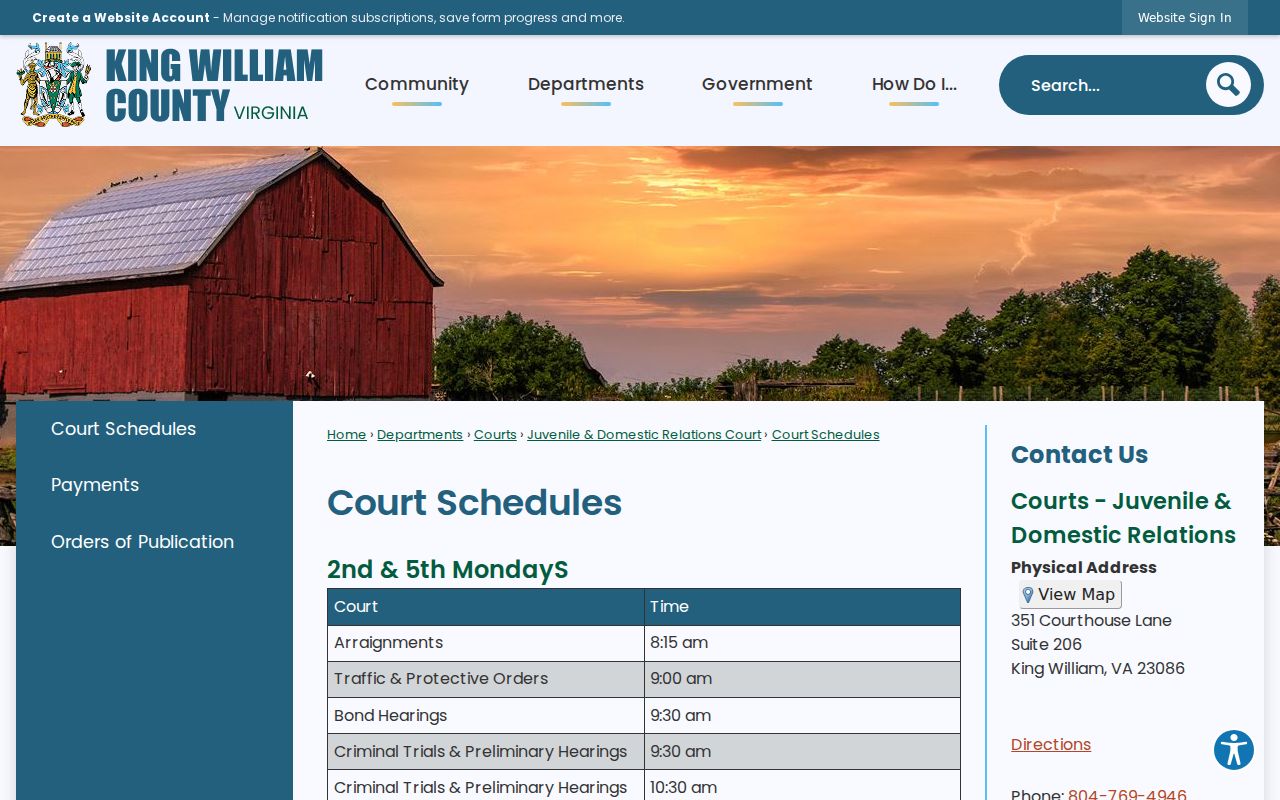
Check the current payment and case instructions directly with the office responsible for the record.